
From Food Waste to Action: Why Sustainability Education Matters
As spring arrives and cookout season begins, many families gather to share meals outdoors. While these moments bring people together, they also produce something many people don’t often think about: food waste. Fruit peels, vegetable scraps, and leftover food are commonly thrown away. When this organic waste ends up in landfills, it breaks down without oxygen and releases methane, a powerful greenhouse gas that contributes to climate change. This is where sustainability comes in.
What is Sustainability?
Sustainability means making choices today that protect our environment and resources for the future. It focuses on reducing waste, conserving natural resources, and creating systems that allow both people and the planet to thrive. Understanding sustainability is critical, especially for the next generation, as they will be the ones leading solutions to environmental challenges.
Why is Composting the Solution?
One powerful scientific solution to food waste is composting. Composting is a natural process in which microorganisms, such as bacteria and fungi, break down organic materials into nutrient-rich soil. With the right balance of oxygen, moisture, and organic matter, food scraps can be transformed into compost that supports plant growth, improves soil health, and reduces the amount of waste sent to landfills.
How is Building Bridges, Inc Making an Impact in Sustainability?
This year, Building Bridges, Inc. is bringing these concepts to life through its new Sustainability Education Program with 6th grade students at Robert L. Grimes Middle School. In partnership with Plant Chicago and Pullman Tech Workshop, the program introduces students to sustainability through hands-on, real-world learning experiences.
Since the program began, students have explored a wide range of environmental topics, including vermicomposting (composting with worms), food waste, recycling, and waste reduction strategies. These lessons go beyond traditional instruction by allowing students to actively engage with the material by observing how organic waste breaks down, asking questions, and thinking critically about solutions.
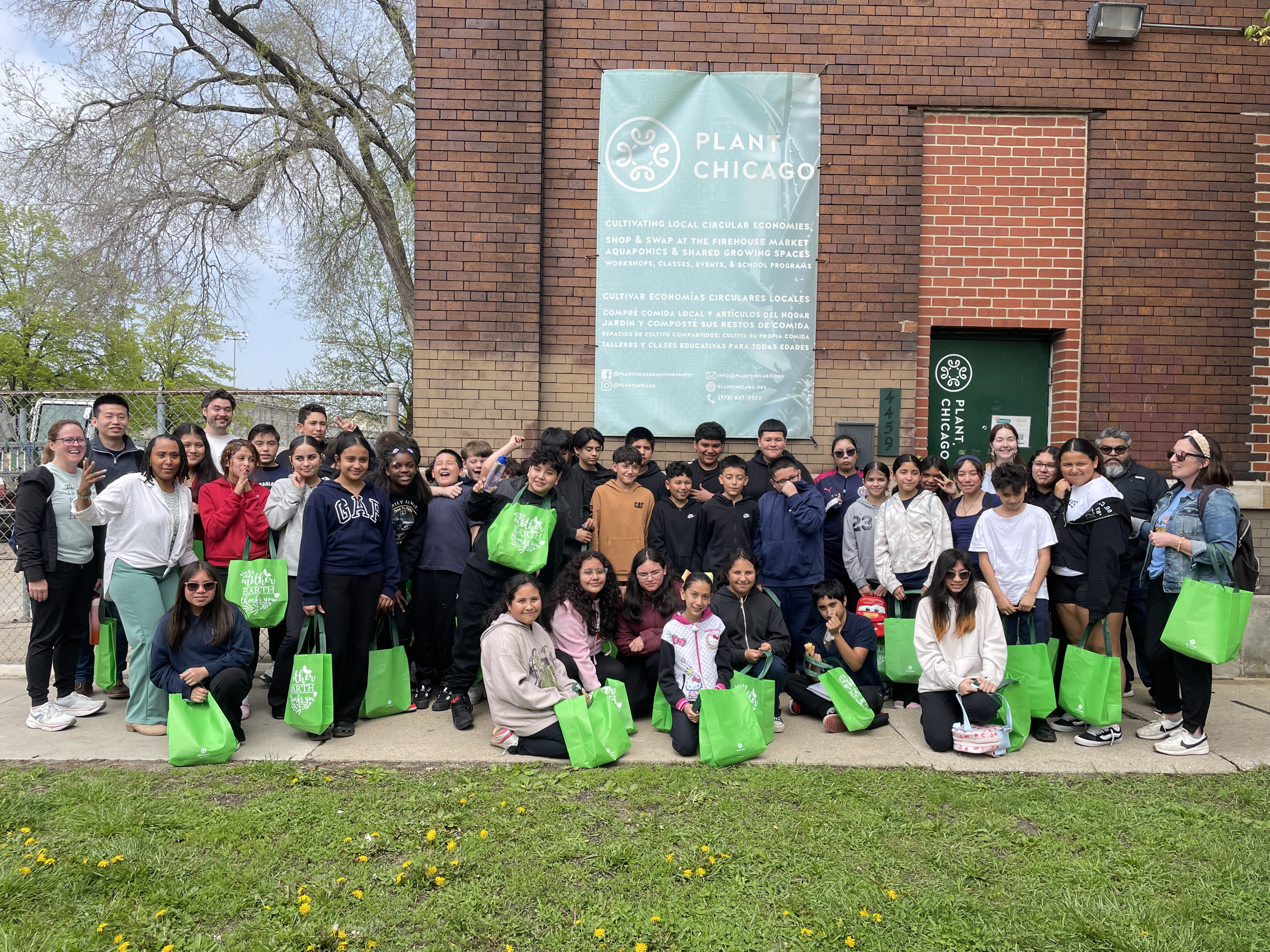
One of the highlights of the program was a recent Earth Day field trip to Plant Chicago, where students participated in a hands-on waste diversion activity. During this experience, they sorted materials, learned how waste is managed in real-world systems, and saw sustainability in action. This type of immersive learning helps students make meaningful connections between what they learn in the classroom and how it applies to their everyday lives.
Why is the Sustainability Education Program Important?
Through this program, Building Bridges, Inc. is doing more than teaching science. It is empowering students to become creative thinkers, problem-solvers, and environmental leaders. By combining STEM education, hands-on activities, and community partnerships, students are learning that sustainability is not just a concept; it is something they can actively practice. From classroom worm bins to real-world waste diversion, students are beginning to understand that small actions can lead to meaningful change.